Kavinthira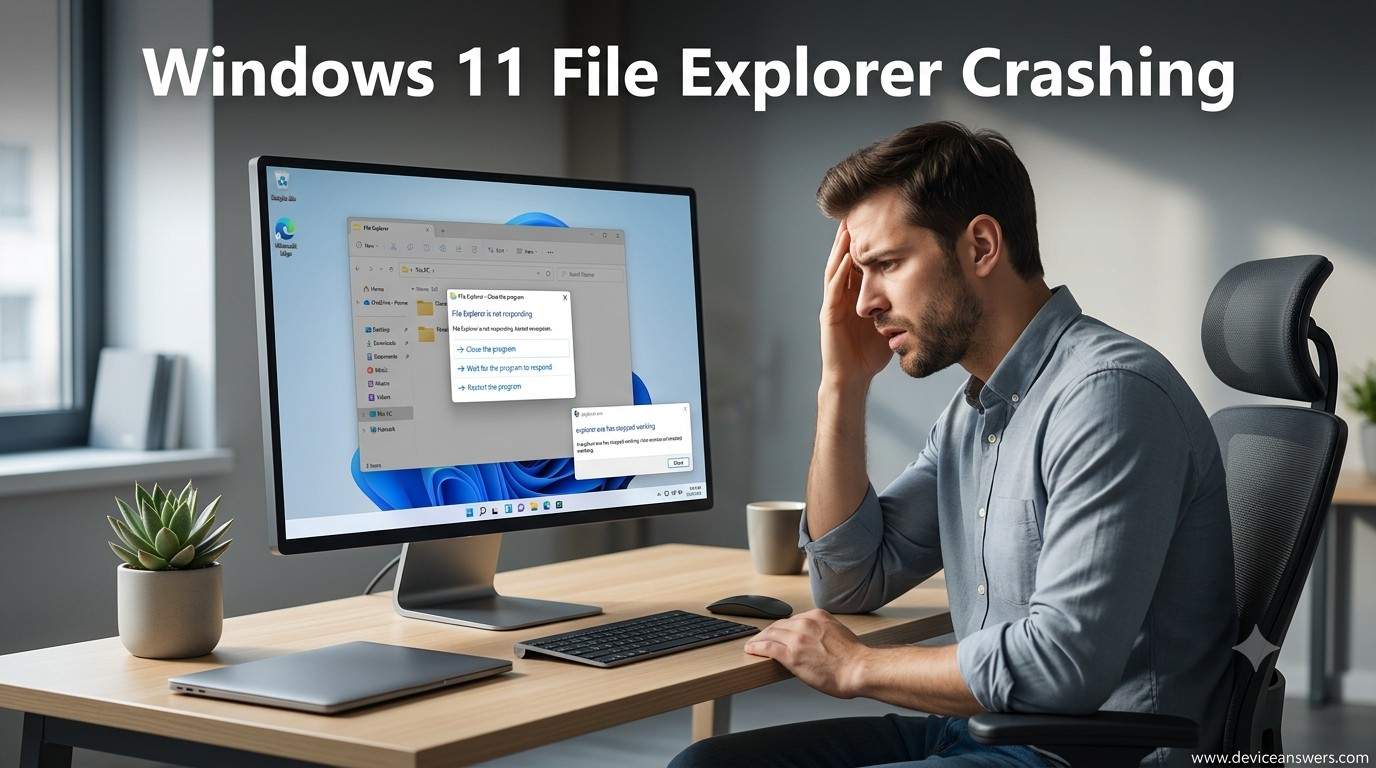
Windows 11 File Explorer Crashing? 10 Proven Fixes That Actually Work
Quick Answer
If your Windows 11 File Explorer keeps crashing, the issue is usually caused by corrupted system files, damaged Explorer.exe processes, outdated Windows Update files, faulty shell extensions, corrupted Quick Access history, or software conflicts. In most cases, restarting Windows Explorer, clearing File Explorer history, running SFC and DISM scans, or installing the latest Windows updates resolves the problem.
Before moving to advanced troubleshooting, try these quick fixes:
- Restart Windows Explorer.
- Restart your Windows 11 PC.
- Clear File Explorer history.
- Install the latest Windows Update.
- Run an SFC scan.
- Run a DISM repair.
These simple steps solve most File Explorer crashes without reinstalling Windows or deleting your files.
Introduction
File Explorer is one of the most frequently used features in Windows 11. It allows you to browse folders, manage files, access external drives, organize documents, and launch applications. When File Explorer starts crashing repeatedly, everyday tasks become difficult and productivity quickly suffers.
Some users experience crashes immediately after opening File Explorer, while others notice that it freezes when browsing folders, copying files, right-clicking items, or accessing Quick Access. In other situations, the Explorer.exe process repeatedly restarts, causing the desktop and taskbar to disappear briefly before reloading.
Fortunately, most File Explorer crashes are caused by software-related issues rather than hardware failures. Corrupted Windows files, damaged File Explorer history, incompatible third-party software, or outdated system components are among the most common causes. Windows includes several built-in repair tools that can often restore File Explorer without requiring a complete operating system reinstall.
This guide explains the most common reasons Windows 11 File Explorer keeps crashing and provides step-by-step troubleshooting methods to restore stable performance.
Common Symptoms of Windows 11 File Explorer Crashing
File Explorer problems don’t always appear the same way. Recognizing the symptoms can help identify the underlying cause more quickly.
You may experience one or more of the following issues:
- File Explorer closes immediately after opening.
- Explorer.exe crashes repeatedly.
- The desktop disappears and reloads unexpectedly.
- File Explorer freezes while browsing folders.
- The program stops responding when opening external drives.
- Right-clicking files causes File Explorer to crash.
- The address bar becomes unresponsive.
- Quick Access takes a long time to load.
- File Explorer crashes while copying or moving files.
- Network folders fail to open.
- Search inside File Explorer stops working.
- The taskbar briefly disappears after every crash.
- File Explorer crashes after a recent Windows Update.
- Only one Windows user account experiences the problem.
- Error messages mentioning Explorer.exe appear on screen.
If you recognize one or more of these symptoms, continue with the troubleshooting methods below.
Why Windows 11 File Explorer Keeps Crashing
Several Windows components work together to keep File Explorer running. When one of these components becomes damaged or stops responding, Explorer may freeze, close unexpectedly, or continually restart.
Corrupted System Files
Missing or damaged Windows system files are one of the most common reasons File Explorer becomes unstable. Interrupted updates, unexpected shutdowns, or software conflicts can corrupt essential operating system files.
Damaged Explorer.exe Process
The Explorer.exe process controls File Explorer, the desktop, and the taskbar. If the process crashes or encounters a software conflict, the Windows interface may restart repeatedly.
Corrupted Quick Access History
Quick Access stores recently opened folders and frequently used files. If this history becomes corrupted, File Explorer may freeze or crash while loading.
Outdated Windows Updates
Running an outdated version of Windows may expose your system to software bugs that have already been fixed in newer cumulative updates released by Microsoft.
Faulty Shell Extensions
Third-party applications often add custom right-click menu options to File Explorer. Poorly designed shell extensions can cause Explorer to crash whenever you browse folders or right-click files.
Corrupted User Profile
If only one Windows account experiences the problem, the User Profile may contain damaged settings that affect File Explorer while other accounts continue working normally.
Software Conflicts
Antivirus programs, file synchronization utilities, compression software, and disk management tools can occasionally interfere with normal File Explorer operations.
Damaged Windows Image
If the Windows operating system image becomes corrupted, built-in components including File Explorer may become unstable until repaired using DISM and the System File Checker (SFC).
Quick Fix Checklist
Before trying advanced repairs, complete these simple checks. Many File Explorer crashes are resolved after performing these basic troubleshooting steps.
- ✅ Restart Windows Explorer from Task Manager.
- ✅ Restart your Windows 11 computer.
- ✅ Install all pending Windows Updates.
- ✅ Clear File Explorer history.
- ✅ Disconnect unnecessary USB drives and external storage devices.
- ✅ Close unused background applications.
- ✅ Run the System File Checker (SFC).
- ✅ Repair Windows using DISM.
- ✅ Disable recently installed shell extension utilities if applicable.
- ✅ Check whether File Explorer works in another Windows user account.
- ✅ Verify that your storage drive has enough free space.
- ✅ Restart your PC after completing each major troubleshooting step.
If Windows 11 File Explorer is still crashing after completing these quick checks, continue with the detailed troubleshooting methods in the next section. We’ll begin with the simplest fixes before moving to more advanced repairs, explaining not only how each method works but also why it can restore File Explorer stability.
How to Fix Windows 11 File Explorer Crashing
If your Windows 11 File Explorer keeps crashing, the issue is usually related to damaged Windows components, corrupted File Explorer settings, outdated system files, or third-party software conflicts. Work through the following troubleshooting methods in order, testing File Explorer after each one before moving to the next solution.
Method 1: Restart Windows Explorer
Why this works: The Windows Explorer process controls File Explorer, the desktop, taskbar, and several Windows interface components. If the process encounters a temporary software error, restarting it reloads the Windows shell without requiring a complete system restart.
Follow these steps:
- Press Ctrl + Shift + Esc to open Task Manager.
- If necessary, click More Details.
- Locate Windows Explorer under the Processes tab.
- Select Windows Explorer.
- Click Restart.
- Wait for the desktop and taskbar to refresh.
- Open File Explorer again.
Restarting Windows Explorer refreshes important Windows interface components and often resolves temporary crashes.
Expected Result: File Explorer opens normally and no longer crashes immediately.
If the problem continues: Proceed to Method 2.
Method 2: Restart Your Windows 11 Computer
Why this works: Restarting your computer clears temporary memory, reloads Windows services, and removes software conflicts that may cause Explorer.exe to become unstable.
Many File Explorer crashes occur because background services remain stuck after Windows updates or extended uptime.
Here’s how:
- Save any open work.
- Click the Start button.
- Select the Power icon.
- Choose Restart.
- Wait for Windows to restart completely.
- Open File Explorer and browse several folders.
If the Start Menu is unavailable, press Ctrl + Alt + Delete, click the Power icon, and select Restart.
Expected Result: Temporary operating system issues are cleared and File Explorer runs more reliably.
If Explorer still crashes: Continue to Method 3.
Method 3: Clear File Explorer History
Why this works: File Explorer stores recently opened files, folders, and search history in Quick Access. If this information becomes corrupted, Explorer may freeze or crash while loading.
Follow these steps:
- Open Control Panel.
- Select File Explorer Options.
- Under the General tab, locate the Privacy section.
- Click Clear.
- Optionally uncheck:
- Show recently used files.
- Show frequently used folders.
- Click Apply.
- Select OK.
- Restart File Explorer.
Clearing File Explorer history forces Windows to rebuild the Quick Access database using fresh information.
Expected Result: File Explorer loads without freezing or crashing.
If the issue persists: Continue to Method 4.
Method 4: Run the System File Checker (SFC)
Why this works: The System File Checker (SFC) scans Windows for missing or corrupted operating system files and automatically replaces them with healthy copies. Damaged system files frequently cause Explorer.exe crashes.
Run the SFC scan:
- Open Command Prompt or Windows Terminal as Administrator.
- Type the following command:
sfc /scannow- Press Enter.
- Wait for the scan to finish.
- If Windows repairs files, restart your computer.
- Test File Explorer again.
The scan may take several minutes. Avoid closing the Command Prompt window until the verification reaches 100%.
Expected Result: Corrupted Windows files are repaired, allowing File Explorer to operate normally.
If File Explorer still crashes: Proceed to Method 5.
Method 5: Repair Windows Using DISM
Why this works: The Deployment Image Servicing and Management (DISM) tool repairs the Windows system image that SFC relies on. If the system image itself is damaged, SFC may be unable to repair File Explorer until DISM restores the underlying Windows components.
Follow these steps:
- Open Command Prompt or Windows Terminal as Administrator.
- Run each command one at a time:
DISM /Online /Cleanup-Image /CheckHealth

DISM /Online /Cleanup-Image /ScanHealth

DISM /Online /Cleanup-Image /RestoreHealth- Wait for each command to complete before running the next one.
- Restart your computer.
- Run sfc /scannow once more.
- Open File Explorer and verify whether the crashes have stopped.
Because DISM may download replacement files from Windows Update, ensure your computer remains connected to the internet throughout the repair process.
Expected Result: Windows repairs damaged system components, and File Explorer opens and runs without unexpected crashes.
If Windows 11 File Explorer continues crashing, continue with the next troubleshooting methods, where we’ll install Windows updates, disable Quick Access, test Safe Mode, create a new user profile, and restore Windows to an earlier working state.
Method 6: Install the Latest Windows Updates
Why this works: Microsoft regularly releases Windows Update patches that fix bugs affecting File Explorer, Explorer.exe, storage management, and system stability. If your crashes started after a previous update or while using an older Windows build, installing the latest updates may resolve the issue.
Follow these steps:
- Press Windows + I to open Settings.
- Select Windows Update.
- Click Check for Updates.
- Download and install all available updates.
- Restart your computer.
- Open File Explorer and browse multiple folders.
Also install any optional quality updates if Microsoft recommends them for your device.
Expected Result: File Explorer operates normally without unexpected crashes.
If the problem continues: Move to Method 7.
Method 7: Disable Quick Access
Why this works: Quick Access automatically loads recently opened files and frequently used folders. If this database becomes corrupted, File Explorer may freeze or crash every time it starts.
To disable Quick Access:
- Open Control Panel.
- Select File Explorer Options.
- Under Open File Explorer To, choose This PC.
- Uncheck:
- Show recently used files.
- Show frequently used folders.
- Click Apply.
- Select OK.
- Restart File Explorer.
Changing the default startup location prevents File Explorer from loading potentially corrupted Quick Access information.
Expected Result: File Explorer opens directly to This PC without crashing.
If Explorer still crashes: Continue to Method 8.
Method 8: Boot Windows into Safe Mode
Why this works: Safe Mode starts Windows with only essential drivers and Microsoft services. If File Explorer works correctly in Safe Mode, the crashes are likely caused by third-party software, startup programs, or shell extensions.
Follow these steps:
- Open Settings.
- Select System > Recovery.
- Click Restart Now beside Advanced Startup.
- Choose Troubleshoot > Advanced Options > Startup Settings.
- Click Restart.
- Press 4 or F4 to start Safe Mode.
- Open File Explorer and test its stability.
If Explorer works normally in Safe Mode, uninstall recently installed software or disable unnecessary startup applications after returning to normal Windows mode.
Expected Result: File Explorer runs without crashing, confirming that a third-party application is likely responsible.
If crashes continue even in Safe Mode: Proceed to Method 9.
Method 9: Create a New User Profile
Why this works: If the problem only affects one Windows account, your existing User Profile may contain corrupted settings. Creating a new profile helps determine whether the issue is account-specific.
Follow these steps:
- Open Settings.
- Select Accounts.
- Click Other Users.
- Select Add Account.
- Create a new Microsoft account or local account.
- Sign out of your current profile.
- Sign in using the new account.
- Open File Explorer and test for crashes.
If File Explorer works correctly in the new account, transfer your personal files to the new profile and continue using it.
Expected Result: File Explorer runs normally in the newly created user account.
If every user profile experiences the same issue: Continue to the final troubleshooting method.
Method 10: Perform a System Restore
Why this works: System Restore returns Windows system files, drivers, and settings to an earlier working state. This method is particularly effective if File Explorer started crashing after installing software, drivers, or a Windows update.
Important: Applications installed after the selected restore point may need to be reinstalled, but your personal files won’t be removed.
To perform a System Restore:
- Press Windows + R.
- Type rstrui.exe and press Enter.
- Select Choose a Different Restore Point.
- Pick a restore point created before the crashes began.
- Click Next.
- Select Finish.
- Allow Windows to restart.
- After restoration, test File Explorer.
System Restore can undo software-related changes that caused File Explorer instability without affecting your documents.
Expected Result: File Explorer works normally after Windows is restored.
Expert Tips to Prevent File Explorer Crashes
Keeping Windows healthy can reduce the chances of future File Explorer crashes.
- Keep Windows 11 updated with the latest security and quality updates.
- Restart your PC regularly instead of leaving it running continuously.
- Avoid force-shutting down your computer whenever possible.
- Run SFC occasionally to detect damaged system files.
- Use Disk Cleanup to remove temporary files.
- Maintain enough free storage space on your system drive.
- Install device drivers only from trusted sources.
- Limit unnecessary shell extensions and right-click menu utilities.
- Create System Restore points before major software changes.
- Use reliable antivirus software to help protect Windows system files.
When to Contact Microsoft Support
If File Explorer continues crashing after completing every troubleshooting method, it may be time to seek professional assistance.
You should contact Microsoft Support if:
- Explorer crashes immediately after every startup.
- Explorer.exe continually restarts even after System Restore.
- Windows reports repeated system errors related to Explorer.
- The issue began after a failed Windows installation.
- Built-in repair tools such as SFC and DISM cannot repair Windows.
- You suspect Windows installation files have become severely damaged.
Before contacting support, note your Windows version, recent software changes, installed updates, and any error messages displayed on screen. This information helps Microsoft diagnose the issue more efficiently.
Frequently Asked Questions
1. Why does Windows 11 File Explorer keep crashing?
Windows 11 File Explorer usually crashes because of corrupted system files, damaged Explorer.exe processes, faulty shell extensions, outdated Windows Update files, or corrupted Quick Access history. Restarting Windows Explorer, clearing File Explorer history, and running SFC and DISM resolve most problems.
2. How do I restart File Explorer in Windows 11?
Open Task Manager by pressing Ctrl + Shift + Esc, locate Windows Explorer under the Processes tab, select it, and click Restart. This refreshes the Windows desktop, taskbar, and File Explorer without restarting your computer.
3. Can corrupted system files cause File Explorer to crash?
Yes. Damaged Windows system files can prevent Explorer.exe from working correctly. Running the built-in System File Checker (SFC) followed by the DISM repair tool can repair missing or corrupted files and restore File Explorer stability.
4. Why does File Explorer crash when I open a folder?
This often happens because of corrupted Quick Access history, damaged folder settings, incompatible shell extensions, or problems with external drives. Clearing File Explorer history and testing in Safe Mode can help identify the exact cause.
5. Does Safe Mode help diagnose File Explorer crashes?
Yes. Safe Mode starts Windows with only essential drivers and Microsoft services. If File Explorer works normally in Safe Mode, a third-party application, startup program, or shell extension is likely causing the crashes.
6. Should I disable Quick Access if File Explorer keeps freezing?
Disabling Quick Access is a good troubleshooting step because corrupted Quick Access history can prevent File Explorer from loading properly. Setting File Explorer to open directly to This PC often resolves freezing and startup crashes.
7. Will creating a new user profile fix File Explorer?
If the crashes occur only in one Windows account, creating a new User Profile can resolve the issue. A damaged user profile may affect File Explorer while the rest of Windows continues functioning normally.
8. Should I reinstall Windows if File Explorer keeps crashing?
Not usually. Most File Explorer problems can be repaired using Windows Update, SFC, DISM, clearing Quick Access history, or performing a System Restore. Reinstalling Windows should only be considered after all other troubleshooting methods have failed.
Conclusion
If your Windows 11 File Explorer keeps crashing, the issue is most often related to software problems such as corrupted system files, damaged Explorer.exe processes, outdated Windows components, or problematic third-party extensions. Fortunately, these issues can usually be resolved without reinstalling Windows.
Start with the simplest fixes by restarting Windows Explorer, rebooting your computer, clearing Quick Access history, and installing the latest Windows Update. If the problem continues, run SFC and DISM, test Windows in Safe Mode, create a new user profile, and use System Restore if necessary.
Following these troubleshooting methods in order gives you the best chance of restoring a stable File Explorer experience. If crashes continue even after completing every step, contacting Microsoft Support is recommended to rule out deeper operating system or hardware issues.